
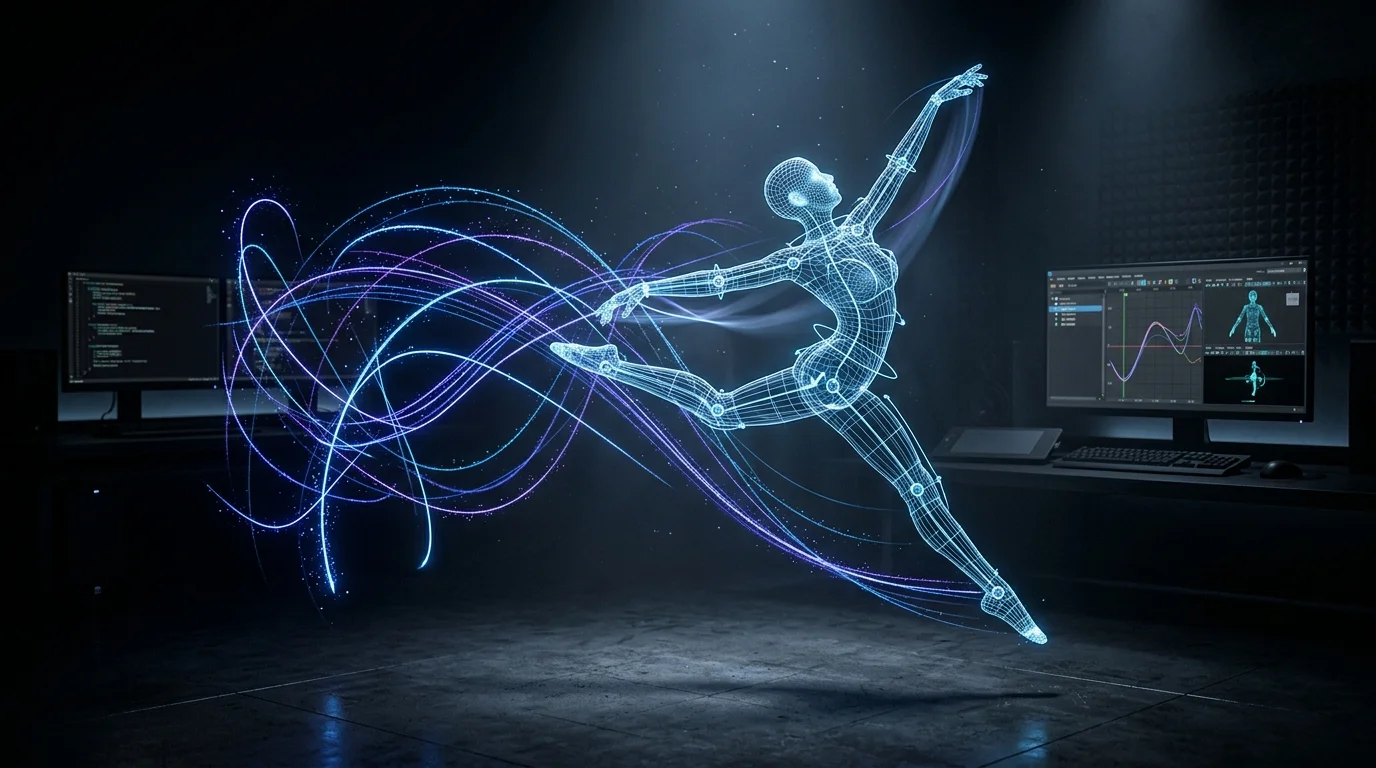
Every iconic character performance in cinematic history—from the subtle emotional hesitation of Woody in Toy Story to the visceral ferocity of Gollum in The Lord of the Rings—originates not from software algorithms, but from an animator's acute understanding of human psychology, biomechanics, and timing. For aspiring animators studying in Bangalore, mastering the 12 Principles of Animation remains the defining foundation separating amateur keyframers from studio-ready character animators.
- 1. Squash & Stretch: Conveying Weight and Organic Volume
- 2. Anticipation: Preparing the Audience for the Action
- 3. Staging: Directing the Cinematic Eye
- 4. Straight Ahead Action & Pose to Pose
- 5. Follow Through & Overlapping Action: Eliminating Rigidity
- 6. Slow In & Slow Out: Tangent Spacing in the Graph Editor
- 7. Arcs: The Natural Trajectory of Organic Motion
- 8. Secondary Action: Enriching Narrative Emotion
- 9. Timing & Spacing: The Soul of Character Performance
- 10. Exaggeration: Amplifying Emotional Truth
- 11. Solid Drawing & 3D Spatial Rig Anatomy
- 12. Appeal: Charisma and Screen Presence
- Why the 12 Principles Make Human Animators Irreplaceable
Originally formulated by Disney animators Ollie Johnston and Frank Thomas in their seminal 1981 work The Illusion of Life, these twelve timeless rules translate seamlessly into modern digital 3D pipelines inside Autodesk Maya and Blender. In this comprehensive masterclass guide from the studio mentors at MAAC Jayanagar, we break down how to apply each principle in 3D space, how to manipulate the Maya Graph Editor for organic weight, and why deep performance artistry ensures human animators remain completely irreplaceable in modern studio pipelines. (For our broader industry market report, see Will AI Replace Animators in 2026? Reality Check).
- How the 12 traditional Disney principles directly control 3D rigs, Euler rotations, and Maya Graph Editor curves.
- The physical mechanics of Squash & Stretch, Anticipation, Arcs, and Follow-Through in digital character acting.
- Why algorithmic diffusion models fail at spatial continuity, physical weight, and micro-expressions.
- Studio-standard workflows: Planning thumbnail sketches, blocking stepped keys, and spline curve polishing.
- Career guidance on mastering character animation at MAAC Jayanagar's high-end production labs in Bangalore.
1. Squash & Stretch: Conveying Weight and Organic Volume
Squash and stretch is the single most vital principle for conveying physical flexibility and weight. Whether animating a bouncing rubber ball, a stylized facial take, or an anatomical muscle contraction on a creature rig, one golden rule governs 3D space: the volume of the object must remain constant. If a character head squashes vertically on impact, it must expand proportionally in width and depth across the X and Z axes.
In Autodesk Maya, rookie animators frequently make the error of scaling character geometry directly, which breaks skinning weights and rig hierarchies. Professional animators instead utilize squash-and-stretch rig controllers wired into non-linear deformers or bone lattices, carefully balancing keyframes in the Graph Editor so that fleshy anatomy feels tactile without turning gelatinous.
2. Anticipation: Preparing the Audience for the Action
In physics and biomechanics, almost no anatomical movement occurs without a preliminary preparation. Before a boxer throws a punch, the shoulder winds back; before a sprinter leaps forward, their knees bend low into a crouch; before a character turns their head in shock, their eyes anticipate the direction first. Anticipation directs the audience's gaze, signaling that an action is about to unfold.
AD3D EDGE Plus — Advanced 3D Animation
Comprehensive career program with hands-on studio showreel production and placement support at MAAC Jayanagar, Bengaluru.
3. Staging: Directing the Cinematic Eye
Staging is the art of positioning characters, silhouettes, camera angles, and focal focal points so that an idea or emotion is instantly unmistakable. In 3D animation, staging dictates whether your pose reads cleanly against the background. A classic industry test taught at MAAC Jayanagar is the Silhouette Test: if you fill your character pose with pure black, can the viewer immediately decipher what emotion they are feeling and what physical action they are performing?
4. Straight Ahead Action & Pose to Pose
In traditional 2D animation, straight-ahead meant drawing frame by frame sequentially, whereas pose-to-pose meant drawing extreme keyframes first and then filling in breakdowns. In 3D digital animation inside Maya, Pose-to-Pose is the undisputed industry standard for character acting. Animators block out the Golden Poses (extremes) on stepped tangents, establish clear timing with the director, insert breakdowns, and only then switch interpolation to spline or auto-tangents for polishing.
5. Follow Through & Overlapping Action: Eliminating Rigidity
Nothing in the physical universe stops all at once. When a running character halts abruptly, their torso stops first, but loose hair, clothing, jewelry, and fleshy appendages continue moving forward due to inertia before snapping back (Follow Through). Similarly, different parts of an anatomy move at different rates—when a character raises an arm, the shoulder initiates, the elbow follows, the wrist trails, and the fingertips settle last (Overlapping Action).
6. Slow In & Slow Out: Tangent Spacing in the Graph Editor
Mechanical machinery moves at constant, linear velocities, but living biological organisms constantly accelerate and decelerate. Slow in and slow out (also called Ease In and Ease Out) describes how actions take time to build speed and decelerate into an extreme pose. In Maya, this is controlled directly in the Graph Editor using Bezier and flat tangents. Mastering spacing on the timeline prevents characters from looking like mechanical automatons.
7. Arcs: The Natural Trajectory of Organic Motion
Human and animal skeletons operate through pivot joints—shoulders, hips, elbows, and knees. Because bones rotate around pivot points, natural biological motion almost invariably travels along curved trajectories or arcs rather than straight linear paths. When a hand waves, a head turns, or a tail wags, the path of action forms an ellipse. Professional 3D animators use motion trail tools inside Maya to verify that their arcs flow organically without jarring velocity spikes.
8. Secondary Action: Enriching Narrative Emotion
A secondary action is an additional gesture or movement that supports and enriches the main action rather than distracting from it. If a character's primary action is angrily storming across a room, secondary actions might include clenching their fists, trembling their jaw, or violently kicking an obstacle aside. Secondary action adds emotional subtext and psychological complexity that automated scripts and generic templates can never invent.
9. Timing & Spacing: The Soul of Character Performance
Timing refers to the number of frames an action takes; spacing refers to how close or far apart the keys are positioned within those frames. An identical character turning their head across 5 frames looks startled; across 15 frames looks inquisitive; across 45 frames looks tired or melancholy. Timing communicates weight, scale, intention, and mood.
10. Exaggeration: Amplifying Emotional Truth
Exaggeration does not simply mean making an action crazy or cartoonish. In modern feature animation—including realistic creature work at studios like DNEG and MPC—exaggeration means pushing a pose, silhouette, or expression slightly beyond reality so it reads clearly and resonates emotionally on a cinematic screen.
11. Solid Drawing & 3D Spatial Rig Anatomy
While 3D animators work with digital models rather than paper, the principle of solid drawing translates into understanding three-dimensional volume, weight distribution, anatomical balance, and center of gravity. If a 3D character stands in contrapposto, their weight must shift visibly onto the supporting leg, tilting the pelvis and counter-tilting the ribcage.
12. Appeal: Charisma and Screen Presence
Appeal is the magnetic quality that makes an audience want to watch a character, whether they are a charming protagonist, an intimidating villain, or an eccentric sidekick. In 3D animation, appeal is achieved through dynamic asymmetry, clear silhouettes, emotive eye performance, and nuanced micro-expressions that reflect genuine empathy.
Why the 12 Principles Make Human Animators Irreplaceable
While generative video models can produce dazzling, dream-like 4-second video clips, they possess zero understanding of three-dimensional spatial coordinates, physical momentum, or narrative subtext. They hallucinate extra fingers, slip sliding feet across floors, and lack the ability to repeat a precise acting direction across 200 consecutive camera setups. A film director or game producer requires exact, frame-level control over character acting, eye darts, comedic timing, and emotional vulnerability.
At MAAC Jayanagar, students train on flagship character animation tracks such as AD3D EDGE Plus and the university-accredited 3-Year UGC B.Voc Degree in Animation & VFX. Working with Autodesk Maya, ZBrush, and Blender, students produce portfolio showreels evaluated by international studio directors, launching lifelong careers at top animation, VFX, and game development studios.